Welcome to APApedia - a comprehensive database dedicated to unraveling the dynamics of alternative cleavage and polyadenylation (APA) during developmental processes.
APA plays a pivotal role as a post-transcriptional regulatory mechanism, shaping transcripts by generating diverse 3' untranslated regions (3' UTR). While the significance of APA has been extensively studied in humans and model organisms, its precise involvement during various developmental processes remains a subject of ongoing exploration. APApedia serves as an invaluable resource specifically designed to shed light on the role of APA in development.
APApedia houses an extensive collection of 257 RNA-seq datasets, encompassing a wide range of developmental contexts. These datasets cover diverse organisms and organ systems, enabling researchers to investigate the dynamic landscape of APA across different developmental stages and tissue types.
Within APApedia, users gain access to a suite of sophisticated tools meticulously crafted to unravel the complexities of APA. Our advanced query system allows you to explore the intricate details of individual APA events within the context of development. By delving into the genome at a granular level, you can uncover precise genomic locations associated with APA events. Additionally, APApedia provides integrated predictions of miRNA and RNA-binding protein (RBP) interactions, enriching your insights into the regulatory networks involved in developmental APA.
Moreover, APApedia employs a rigorous clustering analysis based on tissue-specific APA patterns and developmental stages. By applying this analysis, we can identify distinct clusters of APA events, providing insights into their potential functional implications and the underlying mechanisms that drive developmental processes.

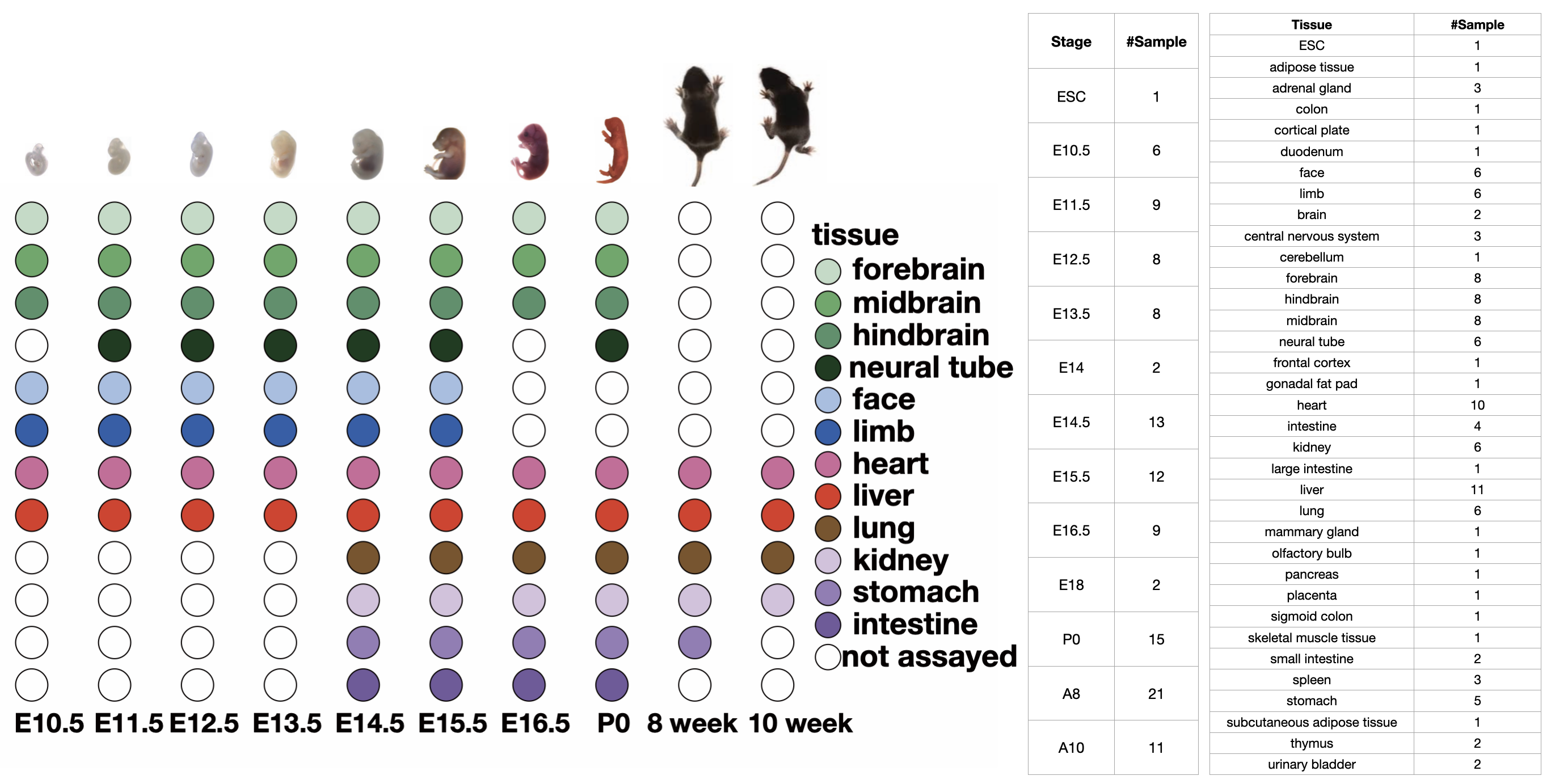
Mouse data summary
E: embryonic, eg. E11.5 means embryonic 11.5 days
P: postnatal, eg. P0 means postnatal 0 day
A: adult, eg. A8 means adult 8 weeks
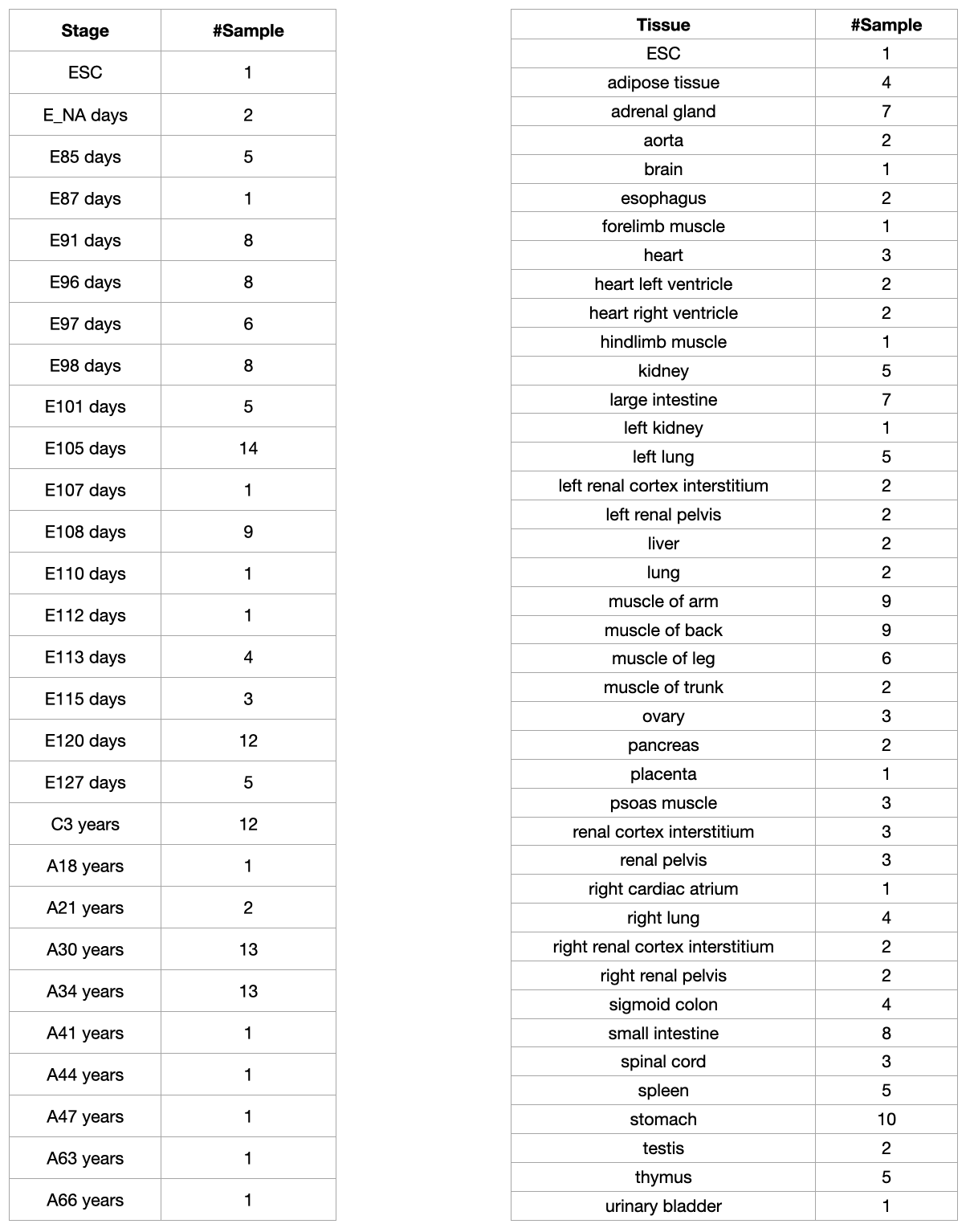
Human data summary
E: embryonic, eg. E85 days means embryonic 85 days, and E_NA days represents the specific timepoint is not clear
C: child, eg. C3 years means child 3 years
A: adult, eg. A18 years means adult 18 years